

Feeding the Material
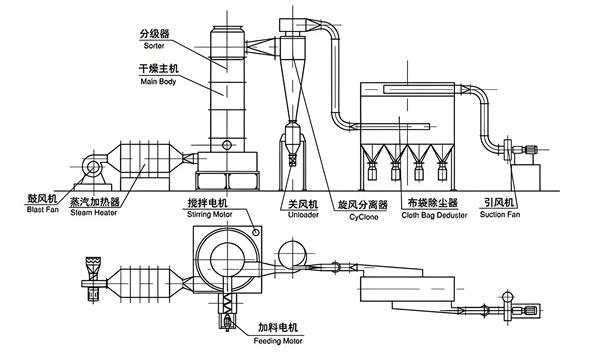
The process starts when wet material (it could be slurry, paste, or cake) is fed into the dryer. A special feeding system ensures that the material enters in controlled amounts.
Breaking and Dispersing
Once inside, the material meets a high-speed rotating disperser or agitator. Imagine a powerful blender breaking down lumps and spreading everything evenly. This step ensures the wet feed is instantly broken into smaller, manageable pieces.
Hot air is introduced into the drying chamber at high velocity. The dispersed particles come into immediate contact with this hot air. Just like how your hair dries faster under a blow dryer, these particles lose moisture quickly due to the intense airflow.
Rapid Moisture Evaporation
Because the particles are so small and well-distributed, the moisture inside evaporates almost instantly. This is where the “flash” in spin flash dryer comes from—the drying is nearly instantaneous.
Separation of Dry Particles
As drying happens, a cyclone separator or bag filter collects the fine dry powder, while the exhaust air is safely discharged. This ensures you get the product in pure, dry form.
Why Are Spin Flash Dryers So Popular?
Before we get into the nitty-gritty of how they work, let’s pause and look at why they’re so widely used.
Speed: Drying happens in seconds, not hours.
Versatility: Can handle sticky, heat-sensitive, or paste-like materials.
Uniformity: Produces fine, consistent powders.
Energy Efficiency: Uses less energy compared to some traditional drying methods.
In short, they save both time and money—two things every manufacturer loves.
