

The sludge dryer is based on an indirect sludge heating system. Indirect heat transfer avoids airflow, and the fully enclosed operation allows for the safe handling of toxic, hazardous, or flammable materials. Due to the low operating speed of the shaft, little to no dust is formed during the drying process, and wear on the installation is minimized. Another advantage of the indirect drying system is the low energy consumption, as all heat is used for evaporating water.
The flexibility of different sludge dryers provides a one-pass drying technology that avoids backmixing. Long sludge residence times combined with an average sludge temperature of 100 degrees Celsius make it possible to provide pasteurized and sanitized sludge. Because the process can handle any type of sludge, the machine is well-suited for centralized drying facilities accepting different types of sludge from different areas. As backmixing is not necessary, any remaining moisture can be selected as the final product. This makes the machine extremely suitable for partially drying to 35-40% dry solids, which is required before sludge incineration.
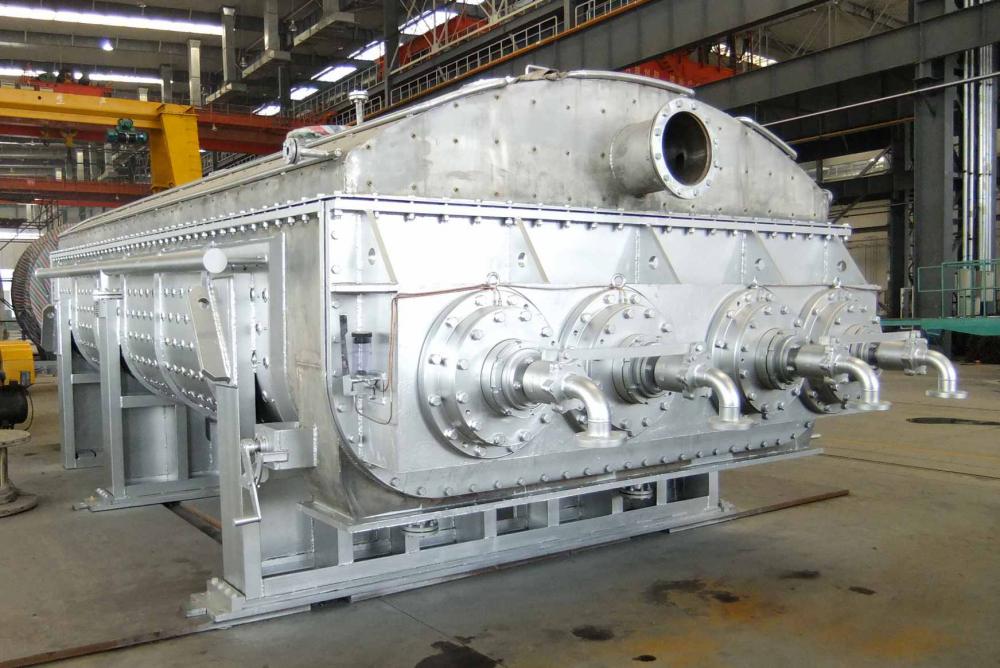
Steam Treatment: All evaporated water is sent to a wet scrubber without the addition of purge air. This means that the volume is limited to the amount of water vapor created at the dome of the dryer. A small amount of non-condensable exhaust vapor can be post-treated to minimize emissions.
The entire unit is mounted on a slightly inclined surface, with the sludge flowing by gravity into a separate outlet at the other end. The dried sludge – with a dry solids content of 95% – is conveyed by a cooling conveyor belt to a dried sludge storage silo, well below the safe temperature of 40 degrees Celsius. The dried product can be used in several applications, such as composting for agriculture or as an alternative fuel in combustion processes.
Process Solutions: Sludge dryers are available in various sizes, ranging from 1.5 square meters of heat transfer area to a large processor with an internal capacity of 300 square meters and a water evaporation rate of 6 tons/hour of sludge.
